Connect this guide with the rest of your visit in the Baku trip planner. Read how the research is made and what its sources establish.
At a glance
Start here
- The boulevard began in 1909 as a planned public waterfront replacing an industrial edge.
- Successive extensions created distinct stretches rather than one uniform promenade.
- Museums and arts venues make the shore a cultural corridor as well as a place to stroll.
- Choose a themed segment and observe the city-sea relationship instead of trying to cover its entire length.
01
Before the promenade, an industrial edge
The Seaside Boulevard Department's history describes an early waterfront occupied by commercial and industrial facilities, including wharves and warehouses. That working edge made sense for an oil and port city, but it separated central Baku from the Caspian as a shared civic landscape.
Remembering those uses prevents the boulevard from becoming a timeless postcard. Its lawns, paths and public outlooks represent choices about which urban functions deserved the shore. Ports and industry did not vanish from Baku's larger economy; a prominent central section was reframed as public space.
Sources: Seaside Boulevard Department02
The 1909 civic project
The official history dates the boulevard's foundation to 1909 and connects it with the Baku City Duma's decision to improve the waterfront. Engineers, gardeners and city officials helped turn an exposed shore into a planned promenade. This makes the boulevard part of the same broader era in which oil-boom Baku sought a new public image.
Unlike a single monument, a promenade produces meaning through repeated use. Planting, paths, edges and views matter because people return to them. The original project established a civic direction—Baku should face the water through shared space—that later administrations could extend, redesign and reinterpret.
Sources: Seaside Boulevard Department; Seaside Boulevard Department03
One name, many historical layers
The boulevard's official chronology records Soviet-era reconstruction, postwar improvements, the creation of Little Venice, designation as a national park in 1998 and major later extensions. These phases explain why the waterfront changes character as you move: formal gardens, open paving, cultural buildings and newer landscaped areas do not all belong to one design moment.
Avoid hunting for a perfectly preserved 1909 strip. Instead, identify transitions. A change in planting, path width, railing, building age or relationship to the road can mark a different planning idea. The boulevard functions as an urban archive whose evidence is distributed horizontally rather than displayed behind museum glass.
Sources: Seaside Boulevard Department; Seaside Boulevard Department04
How culture moved to the water
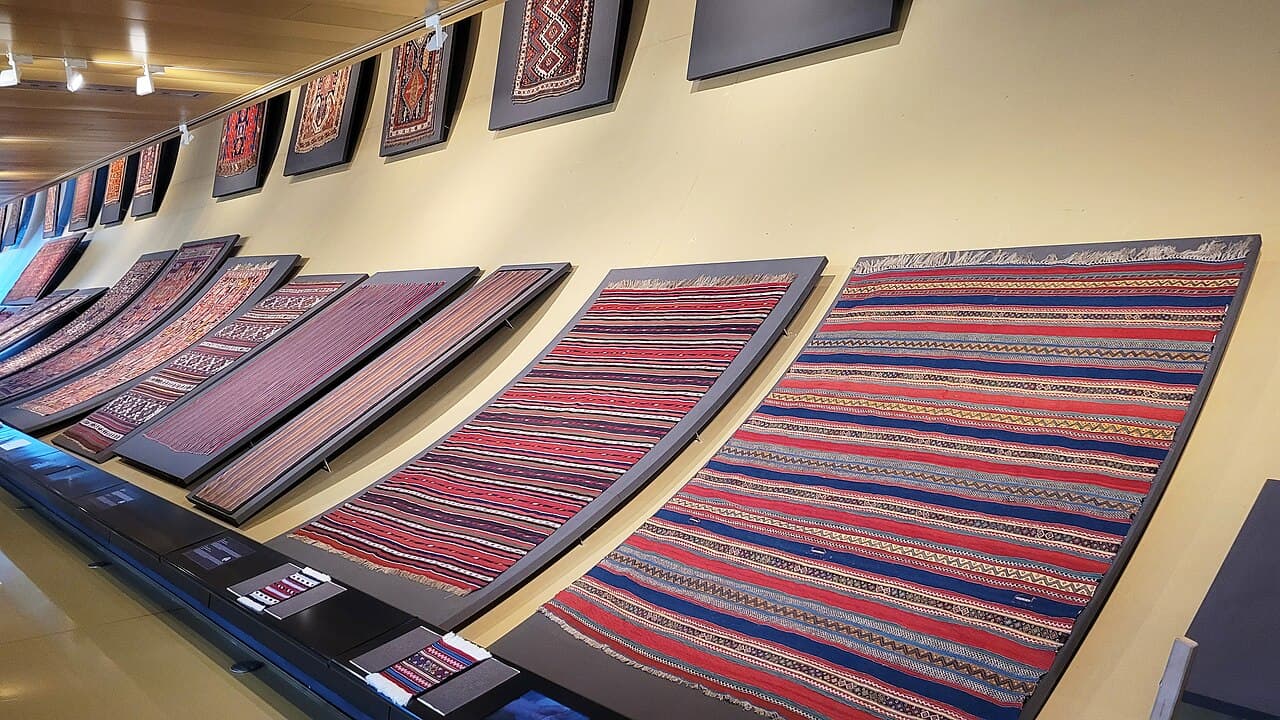
The Boulevard Department lists the Azerbaijan National Carpet Museum, Puppet Theatre, Stone Chronicle Museum, YARAT Contemporary Art Space and Museum of Azerbaijani Painting among cultural venues associated with the park. The tourism authority also presents these as anchors along different waterfront stretches.
Together they turn the shoreline into a cultural route, but they serve very different interests. A carpet collection, experimental art space and stone museum should not be treated as substitutes. Choose one interior programme, verify its current operation and let the exterior journey connect it to the larger story of a waterfront designed for public encounter.
Sources: Seaside Boulevard Department; Azerbaijan Tourism Board05
Leisure structures reveal changing tastes
Little Venice appears in the official history as a mid-twentieth-century addition and in current tourism material alongside other leisure landmarks. Its artificial waterways present the Caspian promenade through a borrowed romantic image, a very different gesture from the civic planting of the boulevard's first phase.
Other recreational installations have arrived in later periods, and their operation can change. Read them as evidence of what different eras expected a public waterfront to provide: scenery, family amusement, spectacle or a destination after dark. There is no need to use every attraction to understand its role in the park.
Sources: Seaside Boulevard Department; Azerbaijan Tourism Board06
Keep looking across the waterline
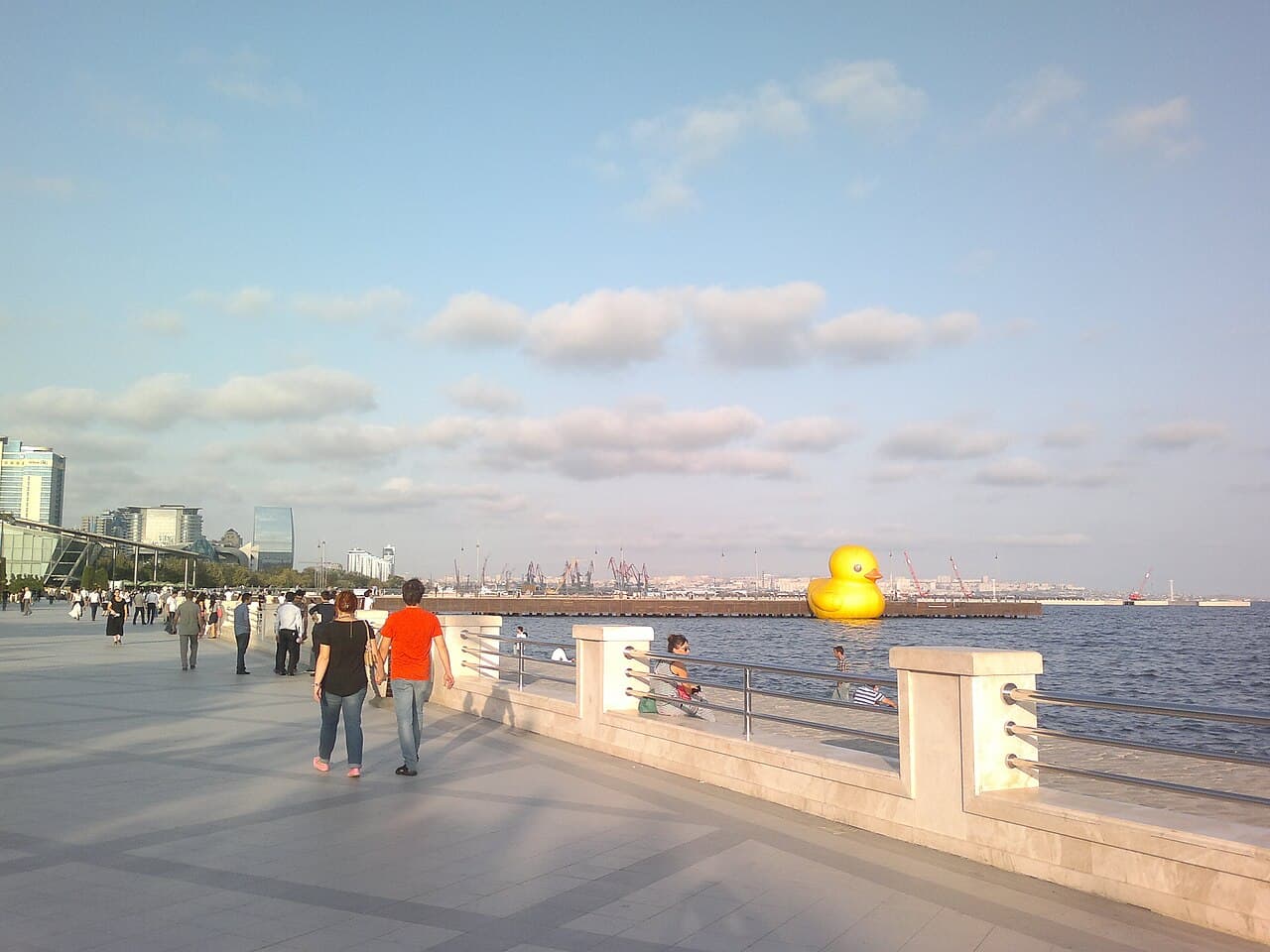
Buildings and amusements can pull attention inland, yet the boulevard's defining act is the opening of Baku toward the Caspian. At intervals, stop and compare the near edge, broad water surface and city behind you. That three-part view explains why the promenade became such a powerful civic image.
Wind, water level, temporary works and event setups may alter the immediate experience, so this feature makes no promise about conditions on a given day. The durable observation is spatial: a formerly utilitarian central shoreline became a protected national-significance public landscape managed for preservation as well as use.
Sources: Seaside Boulevard Department; Seaside Boulevard Department07
Choose a segment, not a conquest
Trying to complete the whole modern boulevard can turn an urban experience into a mileage target. A history-led segment can centre on the older park and Little Venice. A museum-led segment can connect the Carpet Museum with nearby public spaces. A contemporary-arts segment can use the Stone Chronicle, YARAT and Painting Museum as orientation points, subject to their live programmes.
Whichever segment you choose, alternate movement with observation. Note one historical layer, one cultural building, one leisure feature and one clear city-water view. This compact framework reveals the boulevard's evolution without claiming comprehensive coverage—and leaves a reason to return to a different stretch.
- History focus: look for changes between older garden spaces and later extensions.
- Culture focus: select one museum or art venue after checking its current programme.
- Urban focus: compare the water's edge, park and city facade at several points.
- Leisure focus: treat attractions as historical layers, not mandatory activities.
Useful answers
Reader questions
When was Baku Boulevard created?
The Seaside Boulevard Department dates its foundation to 1909, when the city began transforming a central waterfront occupied by wharves, warehouses and other utilitarian structures into a public promenade.
Sources: Seaside Boulevard DepartmentIs Baku Boulevard one uniform historical park?
No. It has been reconstructed and extended repeatedly, with Soviet-era landscaping, Little Venice, national-park designation and newer stretches belonging to different phases. Changes in design are part of its story.
Sources: Seaside Boulevard Department; Seaside Boulevard DepartmentWhich museums are associated with the boulevard?
The official department lists the Carpet Museum, Stone Chronicle Museum, YARAT Contemporary Art Space, Museum of Azerbaijani Painting and Puppet Theatre among its cultural venues. Check each venue's own programme before planning an interior visit.
Sources: Seaside Boulevard Department; Azerbaijan Tourism BoardDo I need to walk the entire boulevard?
No. Its historical phases and cultural anchors can be understood through a carefully chosen section. A focused walk with several observation stops is more useful than treating the full waterfront as a distance challenge.
Sources: Seaside Boulevard Department; Seaside Boulevard DepartmentRead the evidence
Sources and further reading
These sources support the relevant sections above. Plans and comparisons are editorial suggestions. Check operators for current arrangements.
- History ↗Seaside Boulevard Department · Research date 14 September 2026
Industrial waterfront, 1909 foundation, historical phases, Little Venice and later extensions.
- Stroll Along Caspian Seaside Boulevard ↗Azerbaijan Tourism Board · Research date 14 September 2026
Visitor-oriented overview of representative cultural and leisure anchors.
- Culture and Art ↗Seaside Boulevard Department · Research date 14 September 2026
Official list of museums, theatres and art venues associated with the park.
- Our Mission ↗Seaside Boulevard Department · Research date 14 September 2026
Protected national-significance status and the department's preservation remit.